Garuda mask
Garuda Mask: The Garuda, a mythical bird in Hindu and Buddhist traditions, represents the king of birds and is associated with power and protection.
There are 42 products.
Active filters
Garuda Mask: The Garuda, a mythical bird in Hindu and Buddhist traditions, represents the king of birds and is associated with power and protection.
The national emblem of Bhutan is a rich symbol of the country's cultural and spiritual heritage.
An antique butter tea cup from Bhutan is a traditional vessel used for drinking butter tea, also known as suja or po cha in Bhutanese. Butter tea is a staple in Bhutanese culture, particularly in high-altitude regions, and is traditionally made with tea, yak butter, and salt. The bowl used to drink this tea is not just a functional item but also carries significant cultural and artistic value.
A mandala is a spiritual and ritual symbol in Asian cultures. It can be understood in two different ways: externally as a visual representation of the universe or internally as a guide for several practices that take place in many Asian traditions, including meditation.
An "Atsara" mask is a traditional Bhutanese mask used in religious and cultural performances, particularly during the annual Tshechu festivals in Bhutan. The Atsara character is typically portrayed as a clown or jester, whose role is to entertain the audience with humorous antics, while also delivering subtle teachings and moral lessons through satire and playful behavior.
The "Four Harmonious Friends" is a traditional motif in Bhutanese and Tibetan art, often depicted in wood carvings, paintings, and other forms of artwork. This symbol represents four animals working together harmoniously, each embodying virtues and contributing to a balanced and thriving environment.
An antique butter tea churn from Bhutan is a traditional vessel used for making butter tea, also known as suja or po cha. This unique beverage is an essential part of Bhutanese culture, particularly in high-altitude regions, and the churn is an important tool in its preparation. The antique butter tea churn not only serves a functional purpose but also holds cultural and historical significance.
A mandala is a spiritual and ritual symbol in Asian cultures. It can be understood in two different ways: externally as a visual representation of the universe or internally as a guide for several practices that take place in many Asian traditions, including meditation.
Garuda Mask: The Garuda, a mythical bird in Hindu and Buddhist traditions, represents the king of birds and is associated with power and protection.
A mandala is a spiritual and ritual symbol in Asian cultures. It can be understood in two different ways: externally as a visual representation of the universe or internally as a guide for several practices that take place in many Asian traditions, including meditation.
Garuda Mask: The Garuda, a mythical bird in Hindu and Buddhist traditions, represents the king of birds and is associated with power and protection.
The "Singye" mask refers to the mask of the Snow Lion, known as "Sengye" in Bhutanese. The Snow Lion is a revered symbol in Bhutanese and Tibetan Buddhist culture, embodying qualities of strength, fearlessness, and joy. The Sengye or Singye mask is one of the most important and recognizable masks used in religious dances (Cham) and rituals in Bhutan.
The "Tsholing" mask is one of the most important and recognizable masks in Bhutanese religious traditions, particularly in Cham dances performed during festivals like Tshechu. Tsholing refers to wrathful deities or protective spirits in Bhutanese and Tibetan Buddhism, who are often depicted in fierce forms to symbolize their power to protect the Dharma (Buddhist teachings) and to ward off evil spirits.
The "Damyen" (sometimes spelled "Dramyen" or "Dramyin") is a traditional Bhutanese lute-like string instrument that plays an important role in the country's musical heritage. The instrument is not only a tool for creating music but also holds cultural and spiritual significance in Bhutan.
The "Tsholing" mask is one of the most important and recognizable masks in Bhutanese religious traditions, particularly in Cham dances performed during festivals like Tshechu. Tsholing refers to wrathful deities or protective spirits in Bhutanese and Tibetan Buddhism, who are often depicted in fierce forms to symbolize their power to protect the Dharma (Buddhist teachings) and to ward off evil spirits.
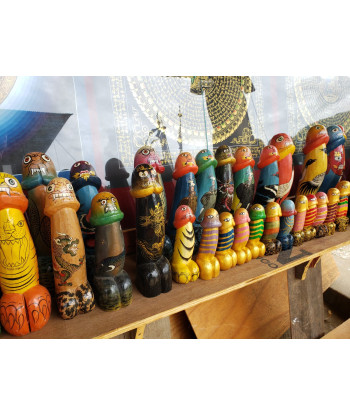
One of the most striking and uniquely Bhutanese symbols is the painted or carved phallus seen on houses, temples, and gateways across the country. To outsiders it may seem humorous or shocking, but in Bhutan this symbol carries deep religious meaning, cultural heritage, and social functions rooted in centuries-old traditions.One of the most striking and uniquely Bhutanese symbols is the painted or carved phallus seen on houses, temples, and gateways across the country. To outsiders it may seem humorous or shocking, but in Bhutan this symbol carries deep religious meaning, cultural heritage, and social functions rooted in centuries-old traditions.