Garuda mask
Garuda Mask: The Garuda, a mythical bird in Hindu and Buddhist traditions, represents the king of birds and is associated with power and protection.
There are 33 products.
Garuda Mask: The Garuda, a mythical bird in Hindu and Buddhist traditions, represents the king of birds and is associated with power and protection.
Bhutanese Cordyceps, scientifically known as *Cordyceps sinensis* and locally referred to as "Yartsa Gunbu," is a rare and highly prized fungus that grows in the high-altitude regions of Bhutan, particularly in the Himalayas. This parasitic fungus infects caterpillars, eventually mummifying them and sprouting a fruiting body from the host, which is harvested for its medicinal properties.
Small: 10 grams
Contains 7-9 Pices of A+ grade
Medium: 20 grams
Contains 14 -17 Pices of A+ grade
Large: 30 grams
Contains 24 -27 Pices of A+ grade
Garuda Mask: The Garuda, a mythical bird in Hindu and Buddhist traditions, represents the king of birds and is associated with power and protection.
The "Singye" mask refers to the mask of the Snow Lion, known as "Sengye" in Bhutanese. The Snow Lion is a revered symbol in Bhutanese and Tibetan Buddhist culture, embodying qualities of strength, fearlessness, and joy. The Sengye or Singye mask is one of the most important and recognizable masks used in religious dances (Cham) and rituals in Bhutan.
The "Damyen" (sometimes spelled "Dramyen" or "Dramyin") is a traditional Bhutanese lute-like string instrument that plays an important role in the country's musical heritage. The instrument is not only a tool for creating music but also holds cultural and spiritual significance in Bhutan.
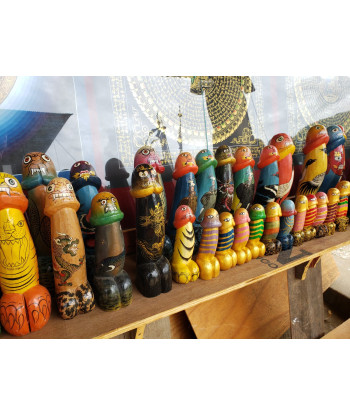
One of the most striking and uniquely Bhutanese symbols is the painted or carved phallus seen on houses, temples, and gateways across the country. To outsiders it may seem humorous or shocking, but in Bhutan this symbol carries deep religious meaning, cultural heritage, and social functions rooted in centuries-old traditions.One of the most striking and uniquely Bhutanese symbols is the painted or carved phallus seen on houses, temples, and gateways across the country. To outsiders it may seem humorous or shocking, but in Bhutan this symbol carries deep religious meaning, cultural heritage, and social functions rooted in centuries-old traditions.
The "Singye" mask refers to the mask of the Snow Lion, known as "Sengye" in Bhutanese. The Snow Lion is a revered symbol in Bhutanese and Tibetan Buddhist culture, embodying qualities of strength, fearlessness, and joy. The Sengye or Singye mask is one of the most important and recognizable masks used in religious dances (Cham) and rituals in Bhutan.
The "Tsholing" mask is one of the most important and recognizable masks in Bhutanese religious traditions, particularly in Cham dances performed during festivals like Tshechu. Tsholing refers to wrathful deities or protective spirits in Bhutanese and Tibetan Buddhism, who are often depicted in fierce forms to symbolize their power to protect the Dharma (Buddhist teachings) and to ward off evil spirits.
The ox mask is an important element in Bhutanese and Tibetan Buddhist culture, particularly in Cham dances and other ritualistic performances. The ox is often depicted as a companion or vehicle of the wrathful deities like Yama, the Lord of Death. In the context of these performances, the ox mask symbolizes strength, patience, and the burdens of life, often playing a key role in dances that deal with themes of death, judgment, and the afterlife.
The monkey mask holds a unique place in Bhutanese and Tibetan Buddhist culture, particularly in Cham dances and other ritualistic performances. While not as commonly featured as some of the wrathful deities, the monkey mask symbolizes various qualities such as mischievousness, cleverness, and sometimes, transformation. In Buddhist mythology, the monkey can represent both the untrained mind, which is restless and easily distracted, and the potential for enlightenment when properly guided
The dog mask is a significant cultural and spiritual symbol in Bhutanese and Tibetan Buddhist traditions, often featured in religious performances and Cham dances. Dogs are revered for their loyalty, protection, and vigilance, and these qualities are reflected in the symbolism and use of the dog mask.
The ox mask is an important element in Bhutanese and Tibetan Buddhist culture, particularly in Cham dances and other ritualistic performances. The ox is often depicted as a companion or vehicle of the wrathful deities like Yama, the Lord of Death. In the context of these performances, the ox mask symbolizes strength, patience, and the burdens of life, often playing a key role in dances that deal with themes of death, judgment, and the afterlife.