- New

 0
0
he traditional Bhutanese bow is a central element of Bhutanese archery (Dha), the national sport of Bhutan. More than a sporting tool, the bow represents heritage, discipline, and community spirit, and has been used in Bhutan for centuries in both daily life and ceremonial events.
 Security policy
(edit with the Customer Reassurance module)
 Delivery policy
(edit with the Customer Reassurance module)
 Return policy
(edit with the Customer Reassurance module)
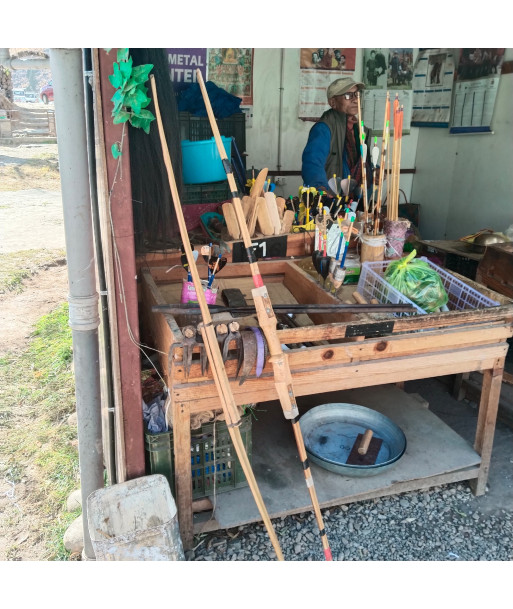
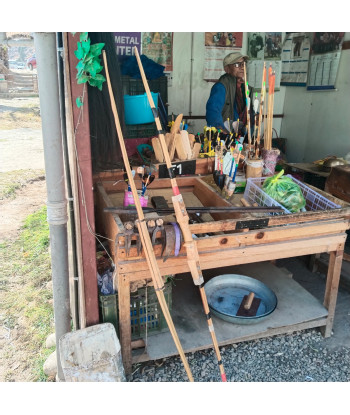
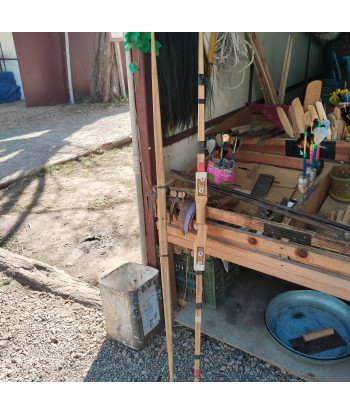
The traditional Bhutanese bow is a central element of Bhutanese archery (Dha), the national sport of Bhutan. More than a sporting tool, the bow represents heritage, discipline, and community spirit, and has been used in Bhutan for centuries in both daily life and ceremonial events.
Traditional Bhutanese bows are handcrafted, most commonly from bamboo, though hardwood is also used in some regions. Bamboo is favored because it is light, flexible, and strong, allowing the bow to store and release energy effectively. The bowstring is traditionally made from animal sinew or plant fibers, while modern versions may use synthetic strings for durability.
The bow is usually long and slightly curved, designed for long-distance shooting, which is a distinctive feature of Bhutanese archery.
Making a traditional bow requires great skill and experience. The bamboo must be carefully selected, dried, shaped, and polished to achieve the right balance between flexibility and strength. This knowledge is traditionally passed down from master craftsmen to younger generations, preserving Bhutan’s artisanal heritage.
The traditional bow plays a vital role in festivals, village competitions, and national celebrations. During archery matches, archers shoot at small targets placed at long distances while teammates sing traditional songs, dance, and perform ritual gestures. The bow thus becomes a symbol of unity, joy, and friendly rivalry.
In Bhutanese culture, the bow is sometimes associated with spiritual protection and good fortune. Before important competitions, bows may be blessed by monks. Historically, bows were also used in rituals and were believed to help ward off negative energies.
he traditional Bhutanese bow is a central element of Bhutanese archery (Dha), the national sport of Bhutan. More than a sporting tool, the bow represents heritage, discipline, and community spirit, and has been used in Bhutan for centuries in both daily life and ceremonial events.