Owel mask
Owl Mask: Owls are considered wise and are often associated with prophecy. Owl masks may be used in dances that involve themes of foresight or spiritual guidance.
There are 40 products.
Active filters
Owl Mask: Owls are considered wise and are often associated with prophecy. Owl masks may be used in dances that involve themes of foresight or spiritual guidance.
Garuda Mask: The Garuda, a mythical bird in Hindu and Buddhist traditions, represents the king of birds and is associated with power and protection.
An antique Bhutanese bamboo basket is a traditional handcrafted container used for a variety of purposes in Bhutanese daily life. These baskets are notable for their craftsmanship, utility, and cultural significance. Bamboo baskets have been an integral part of Bhutanese culture for centuries, reflecting both practical needs and artistic traditions.
Garuda Mask: The Garuda, a mythical bird in Hindu and Buddhist traditions, represents the king of birds and is associated with power and protection.
An antique Buddhist damaru (also spelled "damru" or "dhamaru") is a traditional ritual instrument used in various Buddhist ceremonies, especially within Tibetan and Himalayan Buddhist traditions. It is a small, hourglass-shaped drum that is often associated with Vajrayana Buddhism and is used in conjunction with other ritual tools to enhance the spiritual atmosphere of ceremonies and practices.
The "Singye" mask refers to the mask of the Snow Lion, known as "Sengye" in Bhutanese. The Snow Lion is a revered symbol in Bhutanese and Tibetan Buddhist culture, embodying qualities of strength, fearlessness, and joy. The Sengye or Singye mask is one of the most important and recognizable masks used in religious dances (Cham) and rituals in Bhutan.
An antique Buddhist Dorji cross (also known as a "Dorje cross" or "Vajra cross") is a traditional ritual object used in Tibetan Buddhism and Himalayan Buddhist practices. The term "Dorje" (or "Vajra" in Sanskrit) refers to a ritual scepter that symbolizes the indestructible nature of enlightenment and spiritual power. The Dorji cross combines elements of the Dorje with a cross-like structure, often signifying the union of wisdom and compassion.
The "Tsholing" mask is one of the most important and recognizable masks in Bhutanese religious traditions, particularly in Cham dances performed during festivals like Tshechu. Tsholing refers to wrathful deities or protective spirits in Bhutanese and Tibetan Buddhism, who are often depicted in fierce forms to symbolize their power to protect the Dharma (Buddhist teachings) and to ward off evil spirits.
The "Damyen" (sometimes spelled "Dramyen" or "Dramyin") is a traditional Bhutanese lute-like string instrument that plays an important role in the country's musical heritage. The instrument is not only a tool for creating music but also holds cultural and spiritual significance in Bhutan.
The "Tsholing" mask is one of the most important and recognizable masks in Bhutanese religious traditions, particularly in Cham dances performed during festivals like Tshechu. Tsholing refers to wrathful deities or protective spirits in Bhutanese and Tibetan Buddhism, who are often depicted in fierce forms to symbolize their power to protect the Dharma (Buddhist teachings) and to ward off evil spirits.
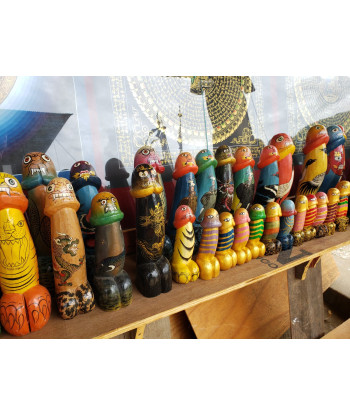
One of the most striking and uniquely Bhutanese symbols is the painted or carved phallus seen on houses, temples, and gateways across the country. To outsiders it may seem humorous or shocking, but in Bhutan this symbol carries deep religious meaning, cultural heritage, and social functions rooted in centuries-old traditions.One of the most striking and uniquely Bhutanese symbols is the painted or carved phallus seen on houses, temples, and gateways across the country. To outsiders it may seem humorous or shocking, but in Bhutan this symbol carries deep religious meaning, cultural heritage, and social functions rooted in centuries-old traditions.
The "Tsholing" mask is one of the most important and recognizable masks in Bhutanese religious traditions, particularly in Cham dances performed during festivals like Tshechu. Tsholing refers to wrathful deities or protective spirits in Bhutanese and Tibetan Buddhism, who are often depicted in fierce forms to symbolize their power to protect the Dharma (Buddhist teachings) and to ward off evil spirits.
The "Singye" mask refers to the mask of the Snow Lion, known as "Sengye" in Bhutanese. The Snow Lion is a revered symbol in Bhutanese and Tibetan Buddhist culture, embodying qualities of strength, fearlessness, and joy. The Sengye or Singye mask is one of the most important and recognizable masks used in religious dances (Cham) and rituals in Bhutan.
The "Tsholing" mask is one of the most important and recognizable masks in Bhutanese religious traditions, particularly in Cham dances performed during festivals like Tshechu. Tsholing refers to wrathful deities or protective spirits in Bhutanese and Tibetan Buddhism, who are often depicted in fierce forms to symbolize their power to protect the Dharma (Buddhist teachings) and to ward off evil spirits.
The "Lord of Yama" mask represents Yama, the Lord of Death in Buddhist mythology. Yama is a significant figure in both Bhutanese and Tibetan Buddhist traditions, where he is considered the ruler of the underworld and the judge of the dead. Despite his fearsome appearance, Yama is not viewed as evil but rather as a necessary force who oversees the process of death and rebirth, ensuring that karmic justice is maintained.