National Emblem of Bhutan
The national emblem of Bhutan is a rich symbol of the country's cultural and spiritual heritage. It features several key elements
There are 143 products.
The national emblem of Bhutan is a rich symbol of the country's cultural and spiritual heritage. It features several key elements
The "Four Harmonious Friends" is a traditional motif in Bhutanese and Tibetan art, often depicted in wood carvings, paintings, and other forms of artwork. This symbol represents four animals working together harmoniously, each embodying virtues and contributing to a balanced and thriving environment.
The national emblem of Bhutan is a rich symbol of the country's cultural and spiritual heritage.
The "Four Harmonious Friends" is a traditional motif in Bhutanese and Tibetan art, often depicted in wood carvings, paintings, and other forms of artwork. This symbol represents four animals working together harmoniously, each embodying virtues and contributing to a balanced and thriving environment.
The "Damyen" (sometimes spelled "Dramyen" or "Dramyin") is a traditional Bhutanese lute-like string instrument that plays an important role in the country's musical heritage. The instrument is not only a tool for creating music but also holds cultural and spiritual significance in Bhutan.
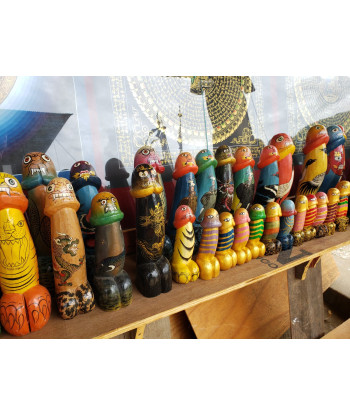
"Phallus: Crazy Wisdom from Bhutan" is a book by Karma Choden that delves into the rich and unique tradition of the phallus in Bhutanese culture. The phallus symbol is deeply rooted in Bhutanese folklore, religion, and daily life, serving as a protector against evil spirits and a source of fertility blessings. It has connections with the teachings of the Buddhist saint Drukpa Kunley, also known as the "Divine Madman," who is celebrated for his unconventional methods of spreading wisdom, including his use of sexual humor to subvert norms and reveal deeper truths.
Description: This book is a compilation of the teachings of Jigme Choeki Drakpa, the 70th Je Khenpo of Bhutan. Je Khenpo is the spiritual leader of Bhutan and is considered to be a reincarnation of Padmasambhava, the founder of Tibetan Buddhism. The book is said to be a powerful tool that can help you to overcome any obstacle in your life.
This cookbook is a culinary journey based on 27 popular Bhutanese recipes, focused on experiencing the "Taste of Thunder" from the Kingdom of the Peaceful Dragon. This cookbook is a culinary journey based on 27 popular Bhutanese recipes, focused on experiencing the "Taste of Thunder" from the "Kingdom of the Peaceful Dragon."
This exquisite Buddhist singing bowl is carved with auspicious mantras, symbols, and emblems on both the inside and the outside. It is made of copper and comes with a light wooden puja stick. The bowl produces a rich, harmonic, and soothing sound that lasts long. The unique tones of this antique bowl create a perfect state for deep meditation, creative thinking, and intuitive messages. It can also be used to reduce stress, initiate healing, and induce tranquil silence.
These Bhutanese Handmade Tingsha are made with traditional technique to produce harmonic overtones. The two cymbals are embossed with two dragons and joined together with a leather strap. Dragons are considered important and celestial creatures in Bhutan. Our country is traditionally called Drukyul meaning the land of the Thunder Dragon.
This beautiful hand hammered singing bowl comes with its own mallet called Puja in Bhutanese and a cushion. It has curved walls, flat bottoms, and lips that face inward to create a clear and crisp tone. This bowl has a fantastic sound and is easy to play. Because of this, they are a great gift for a beginner or experienced collector.
A beautiful singing bowl that is decorated with the Om Mani Peme Hung mantra. This bowl has a fantastic sound and is easy to play. The sound and vibrations promote a relaxed state perfect for deep meditation, creative thinking and intuitive massages.
Bhutanese masks, known for their rich symbolism and craftsmanship, play a significant role in the country's religious and cultural festivals, particularly during traditional "Tshechus" (festivals). These masks are intricately designed to represent various deities, animals, demons, and mythological figures, and they embody Bhutanese spiritual beliefs. They vary in size, design, and price, depending on the complexity of the artwork, materials used, and the symbolism they hold. Below is a detailed breakdown of some common types of Bhutanese masks, their typical sizes, and price ranges.
The ox mask is an important element in Bhutanese and Tibetan Buddhist culture, particularly in Cham dances and other ritualistic performances. The ox is often depicted as a companion or vehicle of the wrathful deities like Yama, the Lord of Death. In the context of these performances, the ox mask symbolizes strength, patience, and the burdens of life, often playing a key role in dances that deal with themes of death, judgment, and the afterlife.
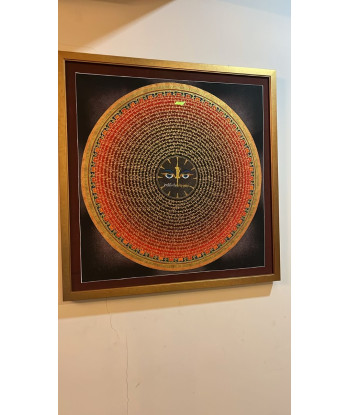
Buddha—also known as the "Eyes of Buddha" or "Buddha Eyes".
The prominent eyes symbolize the omniscience of the Buddha—his ability to see all.
The dot or third eye between the eyes represents spiritual awakening or divine insight.
The squiggly symbol where a nose would be is actually the Nepali number 1, symbolizing unity and the path to enlightenment.
Surrounding the Buddha Eyes are mantras or Buddhist sutras meticulously inscribed in a spiral or mandala format.
The most common mantra used in such designs is:
"Om Mani Padme Hum"
This is the mantra of Avalokiteshvara, the Bodhisattva of Compassion.
Each syllable in the mantra purifies one of the six realms of existence.